Why Asian Rice Farmers Choose Sesbania as Green Manure
Rice is the lifeline of Asia, feeding billions across the continent. Yet decades of intensive monoculture have depleted soil nitrogen, forced expensive synthetic fertilizer dependence, and degraded paddy soil health. Sesbania green manure offers a proven, natural solution that Asian farmers have relied on for generations -- and modern science has now validated with rigorous data.
As a fast-growing leguminous crop, Sesbania cannabina and Sesbania sesban deliver unmatched nitrogen fixation in flooded paddy conditions where other green manure crops simply fail. Unlike sunn hemp or mung bean, Sesbania thrives in standing water, tolerates saline soils, and produces massive biomass in just 50 days -- perfectly fitting between rice cropping cycles.
For governments, cooperatives, and distributors looking to buy Sesbania seeds in bulk, Kohenoor International provides the quality assurance, volume capacity, and export logistics that large-scale Asian agricultural programs demand.
Country-Specific Benefits Across Asia
Each Asian market has unique agricultural challenges. Here is how Sesbania seeds address the specific needs of farmers across the region:
Taiwan
二期稻作 Green Manure RotationTaiwanese rice farmers practicing second-crop rotation (二期稻作) use Sesbania between harvests to restore soil nitrogen. Research from National Taiwan University (NTU) confirms Sesbania incorporation before second-season transplanting boosts yields by 15-22% while reducing urea application by up to 60%. Ideal for Taiwan's subtropical climate with heavy summer rainfall.
China
Saline Soil ImprovementChina's Yellow River Delta and coastal provinces face severe soil salinization. Research by the Chinese Academy of Agricultural Sciences (CAAS) demonstrates Sesbania cannabina reduces soil salinity by 30-40% over two growing seasons through bio-drainage and organic matter incorporation. Now adopted across Shandong, Jiangsu, and Guangdong provinces.
South Korea
Eco-Friendly Farming (친환경농업)Korea's eco-friendly farming certification (친환경농업) increasingly requires green manure use. Sesbania fits perfectly into Korea's autumn-winter cover cropping window and satisfies government subsidy requirements for reduced chemical inputs. Korean rice commands premium pricing under eco-friendly labeling -- Sesbania makes that certification achievable.
Japan
Organic Rice (有機米)Japan's premium organic rice market (有機米) requires JAS-certified practices that eliminate synthetic fertilizers. Sesbania green manure is fully JAS-compliant and enables organic rice producers to maintain competitive yields. Japanese organic rice retails at 2-3x conventional pricing, making Sesbania's nitrogen contribution highly profitable.
Southeast Asia
Tropical Paddy ConditionsAcross Thailand, Vietnam, Myanmar, Philippines, and Indonesia, Sesbania excels under tropical heat, heavy monsoon rainfall, and flooded field conditions. IRRI research shows Sesbania produces 20-30 tonnes/ha of green biomass in tropical lowland rice systems, dramatically improving soil organic carbon and reducing fertilizer costs for smallholder farmers.
Scientific Backing: Nitrogen Fixation Data
The effectiveness of Sesbania as a nitrogen-fixing green manure is backed by decades of peer-reviewed research from leading Asian agricultural institutions:
- Nitrogen fixation rate: 80-120 kg N/ha in a single 50-60 day growing cycle, rivaling expensive synthetic urea applications (46% N content, equivalent to 175-260 kg urea/ha saved).
- National Taiwan University (NTU): Field trials in Taichung and Tainan demonstrated Sesbania incorporation increased subsequent rice grain yield by 0.8-1.2 tonnes/ha compared to fallow controls.
- International Rice Research Institute (IRRI): Multi-year studies across Philippines and Vietnam confirmed Sesbania green manure sustains rice yields equivalent to 90 kg N/ha from synthetic fertilizer, with cumulative soil health improvements over 3-5 year rotations.
- Chinese Academy of Agricultural Sciences (CAAS): Research documented Sesbania cannabina fixing 96-118 kg N/ha in saline-alkaline soils of Jiangsu Province, with simultaneous soil desalinization benefits.
- Biomass production: 20-35 tonnes/ha fresh biomass, contributing 4-6 tonnes/ha of organic matter to soil.
- Phosphorus mobilization: Sesbania root exudates solubilize fixed soil phosphorus, improving P availability to subsequent rice crops by 20-35%.
Sesbania vs Other Green Manure Crops: Head-to-Head Comparison
When selecting a cover crop for rice paddies, Asian buyers should consider these critical performance metrics. Sesbania consistently outperforms alternatives:
| Parameter | Sesbania | Sunn Hemp | Mung Bean | Cowpea |
|---|---|---|---|---|
| Days to Incorporation | 50 days | 60-75 days | 60-70 days | 65-80 days |
| N Fixation (kg/ha) | 80-120 | 50-80 | 40-60 | 30-50 |
| Biomass (t/ha fresh) | 20-35 | 15-25 | 8-12 | 10-15 |
| Waterlogging Tolerance | Excellent | Poor | None | None |
| Salinity Tolerance | Up to 8 dS/m | Low | Low | Moderate |
| Tropical Adaptability | Excellent | Good | Good | Good |
| Seed Cost (relative) | Low | Medium | High | Medium |
| Dual Nodulation | Root + Stem | Root only | Root only | Root only |
Sesbania Cannabina: The Dual Nitrogen-Fixing System
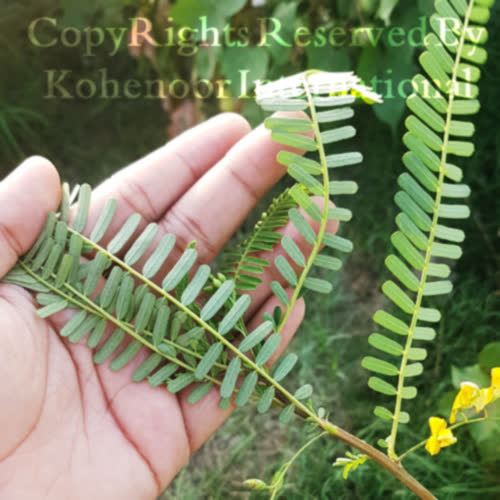
What makes Sesbania cannabina truly exceptional among green manure crops is its rare dual nitrogen-fixing system -- a biological advantage shared by very few leguminous species:
Two Pathways to Maximum Nitrogen Fixation
Root Nodules (Rhizobium)
Like most legumes, Sesbania forms symbiotic root nodules with Rhizobium bacteria. These nodules fix atmospheric N2 into plant-available ammonium (NH4+), contributing approximately 60-70% of total nitrogen fixation. Root nodules begin forming within 10-14 days of germination.
Stem Nodules (Azorhizobium caulinodans)
Uniquely, Sesbania cannabina also develops stem nodules through symbiosis with Azorhizobium caulinodans. These aerial nodules form on submerged stem portions in flooded paddies, contributing an additional 30-40% nitrogen fixation. This is why Sesbania outperforms all other green manures in waterlogged conditions.
This dual nodulation system means Sesbania continues fixing nitrogen even when roots are oxygen-deprived in flooded paddies -- precisely when other legumes stop fixing nitrogen entirely. For Asian rice systems, this is a game-changing biological advantage.
Product Specifications
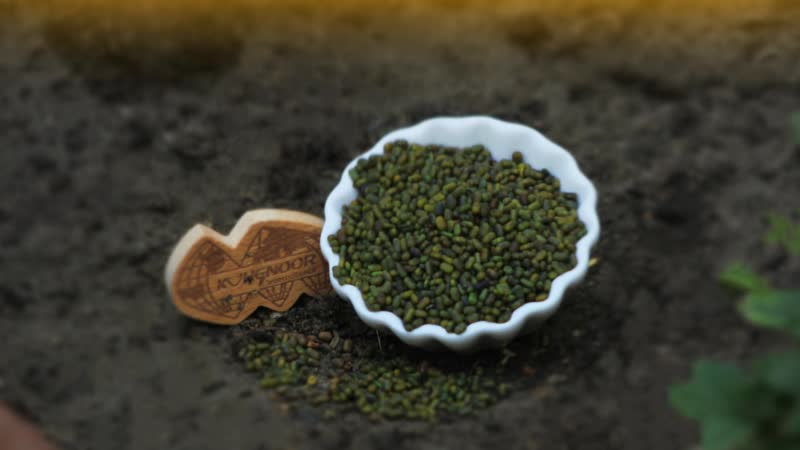
Kohenoor International supplies Sesbania seeds wholesale to exacting international quality standards. Every shipment undergoes laboratory testing and comes with a Certificate of Analysis (COA):
| Parameter | Specification |
|---|---|
| Botanical Name | Sesbania cannabina / Sesbania sesban |
| Common Names | Sesbania, Dhaincha, Jantar |
| Purity | 98% minimum |
| Germination Rate | 85% minimum (ISTA tested) |
| Moisture Content | 10% maximum |
| Inert Matter | Less than 2% |
| Weed Seed Content | Less than 0.1% |
| Seed Size | 3-4 mm |
| Packaging | 25 kg / 50 kg polypropylene bags (custom packaging available) |
| MOQ (Minimum Order) | 1 metric ton (MT) |
| Certifications | Phytosanitary certificate, COA, fumigation certificate included |
Why Source from Kohenoor International?
Established in 1957, Kohenoor International is Pakistan's premier agricultural seed exporter with nearly seven decades of unbroken service to global markets:
Export Logistics for Asian Buyers
We have optimized our supply chain for fast, reliable delivery to all major Asian ports:
- Shipping Terms: FOB Karachi (standard) or CIF to your destination port
- Asian Ports Served: Kaohsiung, Keelung, Shanghai, Qingdao, Tianjin, Busan, Incheon, Kobe, Yokohama, Bangkok (Laem Chabang), Ho Chi Minh City, Manila, Yangon, Jakarta (Tanjung Priok), Port Klang
- Lead Time: 7-14 business days from order confirmation to vessel loading
- Transit Time: 10-18 days to most Asian ports from Karachi
- Payment Terms: Letter of Credit (LC) and Telegraphic Transfer (TT) accepted
- Documentation: Commercial invoice, packing list, Bill of Lading, phytosanitary certificate, fumigation certificate, Certificate of Analysis (COA), Certificate of Origin
- Container Loads: 20 GP (~18 MT) or 40 GP (~26 MT) available; LCL for smaller orders
- Samples: Free 1 kg samples available for quality evaluation before bulk order
Frequently Asked Questions
Our minimum order quantity for Sesbania seeds is 1 metric ton (MT). We regularly fulfill orders ranging from 1 MT to 500+ MT for government agricultural programs, cooperative purchasing organizations, and private distributors across Asia. Contact us for volume-based pricing.
Sesbania green manure fixes approximately 80 to 120 kg of nitrogen per hectare within a 50 to 60 day growth cycle. This is among the highest nitrogen fixation rates of any green manure crop, as documented by IRRI and the Chinese Academy of Agricultural Sciences. This is equivalent to saving 175-260 kg of synthetic urea per hectare.
Yes. Sesbania cannabina is uniquely tolerant of both waterlogged and saline conditions, making it ideal for Asian rice paddies and coastal reclamation projects. It thrives in standing water up to 30 cm deep and tolerates soil salinity up to 8 dS/m. Its dual nodulation system (root + stem nodules) allows nitrogen fixation to continue even in flooded conditions.
We offer FOB Karachi as standard, with CIF available to all major Asian ports including Kaohsiung, Shanghai, Busan, Kobe, Bangkok, and Ho Chi Minh City. Lead time is 7 to 14 business days from order confirmation. Payment via Letter of Credit (LC) and Telegraphic Transfer (TT) accepted. Full documentation including phytosanitary and fumigation certificates provided.
Absolutely. Sesbania green manure is fully compliant with JAS (Japanese Agricultural Standards) organic certification and Korean eco-friendly farming (친환경농업) regulations. It replaces synthetic nitrogen fertilizers naturally, supporting organic rice premium pricing. Many Japanese and Korean organic rice producers already rely on Sesbania as their primary nitrogen source.
Sesbania outperforms both in three critical areas: speed of biomass production (50 days vs 70+ days), waterlogging tolerance (excellent vs poor/none), and total nitrogen fixation (80-120 kg N/ha vs 50-80 kg N/ha for sunn hemp and 40-60 kg N/ha for mung bean). Additionally, Sesbania's dual root-and-stem nodulation system is unique among common green manure crops.
See Kohenoor Quality Firsthand
From Our Fields in Sindh, Pakistan to Your Farm
Ready to Order Premium Sesbania Seeds?
Get competitive pricing for bulk Sesbania seed exports to Asia. Free samples available. Fast quotes within 24 hours.