Sesbania Grandiflora Seeds — Agati Tree Seeds for Export

Premium-quality Sesbania grandiflora (Agati) seeds producing the world's fastest-growing edible-flower tree. Prized across Southeast Asia for cuisine, traditional medicine, high-protein fodder, and pulpwood production.

90%+ Germination 98% Purity Edible Flowers ISTA Tested

Botanical Description & Taxonomy

Scientific Classification

Sesbania grandiflora (L.) Pers. is a fast-growing, soft-wooded leguminous tree belonging to the family Fabaceae, sub-family Papilionoideae. Among all sesbania species, S. grandiflora is distinguished by its remarkably large flowers — the largest in the entire legume family — and its extraordinary growth rate, which ranks among the fastest of any tree species globally. The tree was first described by Linnaeus as Robinia grandiflora and subsequently transferred to the genus Sesbania by Christiaan Hendrik Persoon in 1807.

Sesbania grandiflora is believed to have originated in the Malay Archipelago or western Oceania, from where it spread through human cultivation across tropical Asia, the Indian subcontinent, East Africa, and the Caribbean. It has been cultivated for centuries as a multipurpose tree in traditional agroforestry systems throughout its range.

Common Names Worldwide

The widespread cultivation of this species across diverse cultures has given rise to numerous local names:

  • English: Agati, vegetable hummingbird, West Indian pea tree, scarlet wisteria, flamingo bill
  • Thai: Khae ban (แคบ้าน), Dok khae (ดอกแค)
  • Filipino: Katuray, Katurai
  • Indonesian/Malay: Turi, Toroy
  • Hindi: Agasti, Hathya, Basna
  • Tamil: Agathi keerai, Agathhi
  • Vietnamese: So dua
  • Sinhalese: Kathurumurunga

Morphological Characteristics

Sesbania grandiflora is a small to medium-sized tree that grows rapidly to heights of 8 to 15 meters, with some exceptional specimens reaching 20 meters. It has a relatively short lifespan of 8 to 15 years, but its extraordinary growth rate — often exceeding 5 meters in the first year — makes it one of the most productive tree species on an annualized basis. The trunk is typically straight with a diameter of 15 to 30 cm at breast height, and the bark is light gray, corky, and deeply furrowed.

The leaves are pinnately compound with 20 to 60 leaflets arranged in pairs along a central rachis measuring 15 to 30 cm. Each leaflet is oblong, 2 to 4 cm long and 6 to 12 mm wide, with a rounded apex and entire margins. The leaflets fold together at night (nyctinasty), a common trait among leguminous trees.

The defining feature of S. grandiflora is its spectacularly large flowers, which are the largest among all Fabaceae species. Individual flowers measure 7 to 10 cm in length, with a broad, recurved standard petal and a curved keel. Flowers are borne in short axillary racemes of 2 to 4 blooms. Two color forms exist: white-flowered (var. alba) and red-flowered (var. coccinea or rubra). White flowers are far more common commercially and are preferred for culinary use.

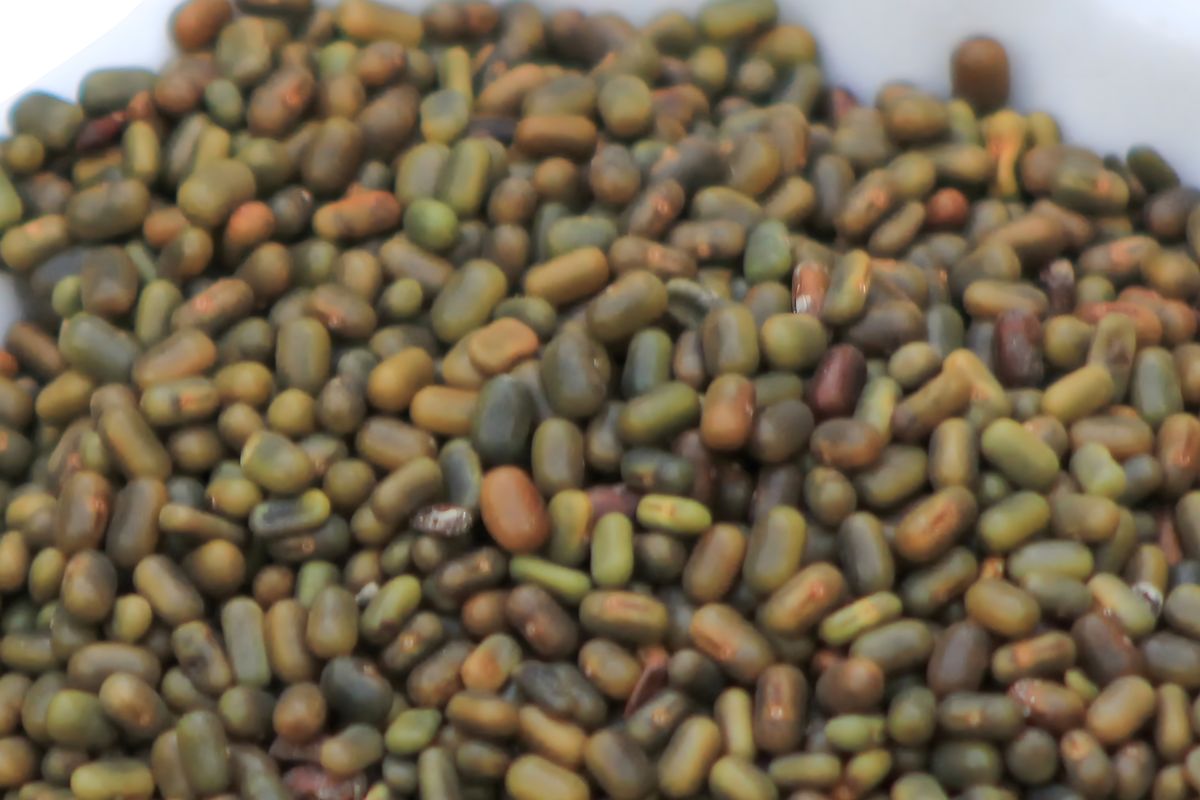
The fruit is a long, narrow, pendulous pod measuring 30 to 60 cm in length and 6 to 9 mm in width, containing 15 to 50 seeds. Seeds are larger than those of other sesbania species, cylindrical, 5 to 7 mm long, with a smooth reddish-brown seed coat. The thousand-seed weight ranges from 35 to 45 grams, making them approximately twice the weight of S. sesban seeds.
Edible Uses & Nutritional Value

Culinary Traditions Across Southeast Asia

Sesbania grandiflora holds a unique position as one of the few tree species whose flowers are consumed as a staple vegetable across multiple cuisines. In Thailand, dok khae (Agati flowers) are an essential ingredient in Thai soups, curries, and salads — particularly in the iconic gaeng som (sour curry) and yam dok khae (flower salad). The flowers are blanched and served alongside nam prik (chili paste dips) as a common side dish in Thai households.

In the Philippines, katuray flowers are dipped in batter and fried as fritters, or sauteed with shrimp, eggs, and tomatoes in a dish called ginisang katuray. Filipino cuisine also uses the young leaves and tender pods as vegetables. In Indonesia, turi flowers appear in pecel (peanut sauce salad), urap (coconut-based mixed vegetable salad), and are stir-fried with chili and shrimp paste. In Sri Lanka, the flowers and leaves are prepared as a mallung (chopped greens with coconut).

The flowers have a mild, slightly sweet flavor often compared to mushrooms or tender lettuce, with a crisp yet delicate texture. Both white and red varieties are edible, though white flowers are generally preferred for their milder taste and more attractive appearance in prepared dishes. The red variety has a slightly more astringent flavor but is valued for its medicinal properties in Ayurvedic and traditional Southeast Asian medicine.

Nutritional Composition

The flowers and leaves of Sesbania grandiflora are remarkably nutritious, offering a combination of protein, vitamins, and minerals that makes them a valuable food source for rural communities.

NutrientFlowers (per 100g fresh)Leaves (per 100g fresh)
Calories27 kcal93 kcal
Protein1.6 g8.4 g
Fat0.4 g1.4 g
Carbohydrates5.8 g11.5 g
Fiber2.1 g3.2 g
Calcium50 mg1130 mg
Iron3.5 mg7.0 mg
Vitamin A450 IU9000 IU
Vitamin C169 mg220 mg
Thiamine (B1)0.21 mg0.21 mg
Riboflavin (B2)0.09 mg0.09 mg

The leaves are particularly notable for their extremely high calcium content (1130 mg per 100g) and beta-carotene (vitamin A precursor). On a dry matter basis, the leaves contain 25 to 30 percent crude protein, making them nutritionally comparable to alfalfa (Medicago sativa) and superior to many other tropical browse species. This protein-rich profile makes both leaves and flowers valuable for combating malnutrition in developing countries.

Agricultural & Industrial Applications

Livestock Fodder & Browse

With 25 to 30 percent crude protein in leaves (dry weight), Sesbania grandiflora is an excellent fodder species for cattle, goats, sheep, poultry, and fish. The leaves are highly palatable with an in vitro digestibility of 60 to 72 percent. In India and Southeast Asia, farmers regularly harvest branches for cut-and-carry fodder systems, with a single tree producing 20 to 30 kg of leaf biomass per year under regular pruning.

Green Manure & Nitrogen Fixation

Like all sesbania species, S. grandiflora forms root nodules with Rhizobium bacteria and fixes atmospheric nitrogen. It can fix 80 to 200 kg N per hectare per year. The rapid biomass production and nitrogen-rich foliage make it valuable for alley cropping and relay intercropping systems where pruned branches are incorporated as green manure. Its deep root system also recycles nutrients from lower soil profiles.

Paper Pulp & Fiber

S. grandiflora is increasingly cultivated as a short-rotation pulpwood crop, particularly in India and Indonesia. The fast growth rate (20 to 40 tonnes biomass per hectare per year) and favorable fiber characteristics (fiber length 1.0-1.4 mm, low lignin 18-20%) make it ideal for producing writing and printing paper. Several paper mills in Tamil Nadu and Andhra Pradesh actively purchase grandiflora wood for pulping.

Traditional & Ayurvedic Medicine

In Indian Ayurvedic medicine, all parts of Sesbania grandiflora are used therapeutically. The flowers are prescribed for headaches, congestion, and fever. The bark is used as an astringent, tonic, and for treating smallpox and other eruptive fevers. Leaf extracts have demonstrated anti-inflammatory, antioxidant, hepatoprotective, and antimicrobial properties in modern pharmacological studies, validating centuries of traditional use.

Shade & Ornamental Planting

The rapid canopy development and attractive large flowers make S. grandiflora a popular shade tree for plantations (particularly coffee, cacao, and pepper), urban landscaping, and roadside planting in tropical countries. The red-flowered variety is especially valued as an ornamental, producing showy crimson blooms that attract hummingbirds, sunbirds, and other pollinators.

Bee Forage & Honey Production

The large, nectar-rich flowers of Sesbania grandiflora are an important forage source for honeybees, particularly the Asian giant honeybee (Apis dorsata) and the Western honeybee (Apis mellifera). The copious nectar production and extended flowering season make it a valuable support species for apiculture in tropical regions, contributing to increased honey yields in nearby hives.

Key Export Markets

Thailand, Philippines & Indonesia — Edible Flower Markets

Southeast Asian countries represent the highest-value market for Sesbania grandiflora seeds, driven by the enduring culinary demand for Agati flowers. Thailand alone cultivates tens of thousands of hectares of grandiflora for flower production, with dok khae featured in markets from Bangkok to Chiang Mai. The Philippines and Indonesia maintain similar scale, with katuray and turi flowers deeply embedded in their food cultures. These markets demand high-germination seed to establish new plantings and replace aging trees in established orchards and backyard gardens.

India — Fodder, Pulp & Medicinal

India imports significant quantities of Sesbania grandiflora seeds for multiple end uses. In southern India (Tamil Nadu, Kerala, Karnataka, Andhra Pradesh), grandiflora is cultivated for livestock fodder, paper pulp, and traditional medicine. The Agathi keerai (leaves) are consumed as a nutritious green vegetable, and the tree is integral to many smallholder agroforestry systems. Indian paper mills in Tamil Nadu represent a growing institutional buyer for grandiflora seeds to establish dedicated pulpwood plantations.

Emerging Markets — Africa, Caribbean & Pacific Islands

Growing awareness of Sesbania grandiflora's multiple uses is expanding demand from East Africa (Kenya, Tanzania, Mozambique), the Caribbean islands, and Pacific nations. International development organizations, including FAO and ICRAF, promote grandiflora for its contribution to nutrition security (edible flowers and leaves), soil improvement, and rapid biomass production. Kohenoor International has supplied grandiflora seeds to development projects in over 15 countries across these regions.

Product Specifications

ParameterSpecification
Botanical NameSesbania grandiflora (L.) Pers.
FamilyFabaceae (sub-family Papilionoideae)
Common NamesAgati, vegetable hummingbird, West Indian pea tree
Germination Rate90% minimum (ISTA tested)
Purity98% minimum
Moisture Content9% maximum
Thousand Seed Weight35 to 45 grams
Seed ColorReddish-brown
OriginPakistan (Punjab & Sindh provinces)
Packaging25 kg or 50 kg PP woven bags
Container Load18-20 MT per 20-foot container
Shelf Life12 to 18 months (cool, dry storage)
CertificationsPhytosanitary Certificate, ISTA Report, Certificate of Origin

Pricing & Trade Terms

Sesbania grandiflora seeds command a premium over other sesbania varieties due to larger seed size, lower per-plant seed yields, and specialized market demand. Our transparent volume-based pricing is as follows:

Order VolumePrice (FOB Karachi)
1 to 5 MT$700 to $800 per MT
5 to 15 MT$600 to $700 per MT
15 MT and above$550 to $600 per MT

CIF pricing to Bangkok, Manila, Jakarta, Chennai, Mombasa, and other major destination ports is available upon request. All standard export documentation is included. Payment via LC or TT. Contact us at usman@kohenoorint.com for current season pricing and availability.

Growing Guide & Cultivation Tips

Climate & Growing Conditions

Sesbania grandiflora performs best in tropical lowland environments with mean annual temperatures of 25 to 35 degrees Celsius. It requires higher temperatures and moisture than S. sesban and is less tolerant of drought and frost. The species thrives at elevations below 1000 meters with annual rainfall of 1000 to 4000 mm, though it will tolerate dry seasons of 3 to 4 months if established. It grows on a range of soil types — sandy, loamy, and clay — with pH 5.5 to 8.0, but performs best on deep, well-drained soils.

Seed Treatment & Nursery Practice

Sesbania grandiflora seeds benefit from pre-sowing treatment to overcome hard seed coat dormancy. Soaking in warm water (60 to 70 degrees Celsius) for 5 minutes followed by 12 to 24 hours in ambient water improves germination significantly. For nursery-raised seedlings, sow seeds 1 to 2 cm deep in polybags or seedling trays filled with a well-drained potting mix. Seedlings emerge within 5 to 7 days and can be transplanted to the field when 30 to 50 cm tall (typically 6 to 8 weeks after sowing).

Field Planting & Management

For commercial flower production, space trees at 3 x 3 meters (approximately 1100 trees per hectare) or 4 x 4 meters (625 trees per hectare). For fodder or pulpwood production, closer spacings of 1 x 1 meter or 2 x 2 meters maximize biomass yield. Regular pruning at a height of 1.5 to 2 meters promotes branching, increases flower production, and keeps the tree manageable for harvesting. The first flower harvest can be expected at 6 to 9 months after planting, with peak production in the second and third years.

Frequently Asked Questions

Are Sesbania grandiflora flowers edible and how are they used in cooking?
Yes, Sesbania grandiflora flowers are widely consumed across Southeast Asia. In Thailand (dok khae), the Philippines (katuray), and Indonesia (turi), the large white or red flowers are used in salads, soups, stir-fries, curries, and fritters. The flowers have a mild, slightly sweet and mushroom-like flavor. They are typically blanched or lightly sauteed, and are a valuable source of protein, iron, calcium, and vitamins A and C.
How quickly does Sesbania grandiflora grow and when does it start flowering?
Sesbania grandiflora is one of the fastest-growing trees in the world. Under favorable conditions it can reach 5 to 8 meters in its first year alone. The tree begins flowering remarkably early, typically within 6 to 9 months after planting from seed. This rapid growth and early flowering make it exceptionally productive for both flower harvest and biomass generation.
What is the nutritional profile of Sesbania grandiflora flowers and leaves?
The flowers contain approximately 1.6% protein, 0.4% fat, and significant amounts of calcium (50mg/100g), iron (3.5mg/100g), vitamin A (450 IU), and vitamin C (169mg/100g). The leaves are even more nutritious with 8.4% protein, an extraordinary 1130mg calcium per 100g, and 9000 IU of vitamin A. On a dry weight basis, leaves contain 25-30% crude protein, comparable to alfalfa.
What climate and soil conditions does Sesbania grandiflora require?
S. grandiflora thrives in tropical lowland climates at 25-35 degrees Celsius with 1000-4000 mm rainfall, below 1000 meters elevation. It grows on sandy, loamy, and clay soils with pH 5.5-8.0. It is less drought-tolerant and less cold-hardy than S. sesban, and does not tolerate frost or prolonged waterlogging.
Can Sesbania grandiflora be used for paper pulp production?
Yes, S. grandiflora is increasingly used as a short-rotation pulpwood species. It produces 20-40 tonnes of fresh biomass per hectare per year with favorable fiber characteristics (1.0-1.4 mm fiber length, 18-20% lignin). Several paper mills in southern India actively source grandiflora wood for producing writing and printing paper, offering a fast-growing, eco-friendly alternative to hardwood pulp.
What is the pricing and minimum order for Sesbania grandiflora seeds?
Sesbania grandiflora seeds are priced at $550-$800 per metric ton FOB Karachi, depending on order volume. Minimum order is 1 MT. The premium over other sesbania species reflects the larger seed size (35-45g per 1000 seeds) and specialized demand. Volume discounts apply above 5 MT. Contact usman@kohenoorint.com for a current quote.

Why Choose Kohenoor International

When you source Sesbania grandiflora seeds from Kohenoor International, you benefit from over two decades of specialized seed export expertise from Pakistan. Our advantages include:

  • Verified Quality: Every lot is ISTA-tested for germination (90%+), purity (98%+), and moisture content. We provide complete certificates of analysis with each shipment, giving buyers confidence in seed performance.
  • Direct Sourcing Network: We procure grandiflora seeds directly from contracted farmers in Punjab and Sindh, ensuring lot traceability and consistent quality. No intermediary handling reduces contamination risk and cost.
  • Export Documentation Expertise: Two decades of navigating phytosanitary, customs, and import permit requirements for 40+ destination countries means your shipment clears customs efficiently. We handle all documentation end-to-end.
  • Competitive Pricing: Our established procurement and processing infrastructure allows us to offer among the most competitive FOB Karachi prices in the market while maintaining premium quality standards.
  • Multi-Species Supplier: As an exporter of all three major sesbania species plus alfalfa and other forage seeds, we can serve buyers who need diversified product lines from a single, reliable source.
  • Responsive Communication: Our sales team is available via email (usman@kohenoorint.com), WhatsApp (+92-321-6340316), and phone for prompt quotations and shipment coordination.

Explore Other Sesbania Varieties

Kohenoor International exports the full range of commercially important sesbania species from Pakistan.

Request a Quote for Sesbania Grandiflora Seeds

Source premium Agati tree seeds with 90%+ germination for edible flower production, fodder, or pulpwood plantations. Worldwide shipping from Karachi.