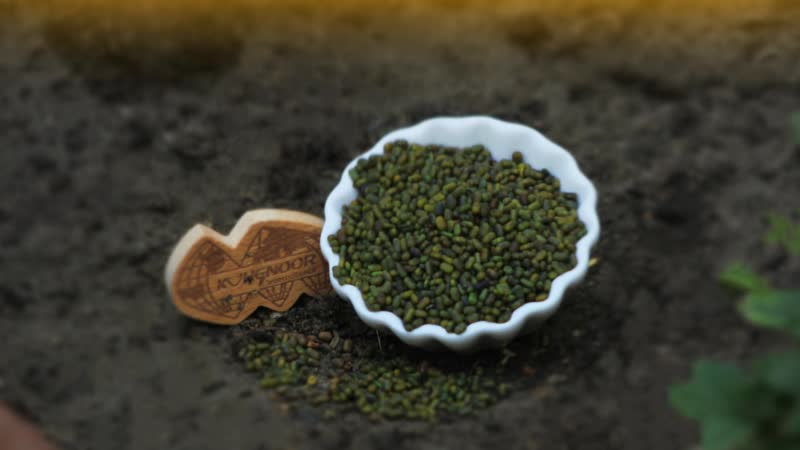
Our Premium Sesbania Seeds
Carefully sourced, cleaned, and graded for maximum germination. Every shipment is phytosanitary-certified for African import regulations.
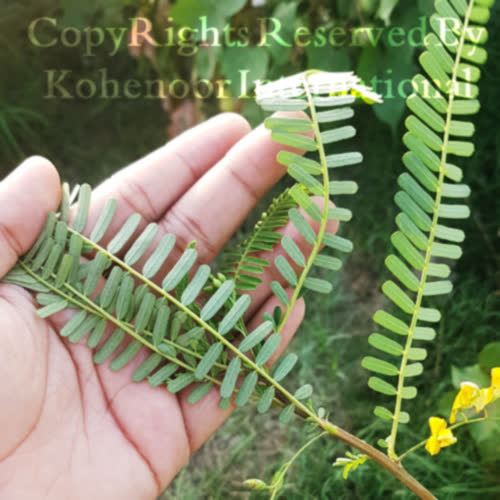
Transforming agriculture across the African continent. From the Great Green Wall to smallholder farms, Kohenoor International supplies bulk sesbania seeds for soil restoration, agroforestry, livestock fodder, and sustainable food security.
Serving Kenya 🇰🇪 • Ethiopia 🇪🇹 • Nigeria 🇳🇬 • Tanzania 🇹🇿 • South Africa 🇿🇦 • Ghana 🇬🇭 • Uganda 🇺🇬 • Mozambique 🇲🇿 • Senegal 🇸🇳 • Sudan 🇸🇩
Africa faces an unprecedented agricultural crisis. With 65% of farmland degraded and a population projected to double by 2050, sesbania seeds offer a proven, affordable solution for soil restoration and sustainable food production.
An estimated 65% of African farmland is degraded, costing the continent $68 billion annually in lost productivity. Sesbania's deep root system breaks hardpan soils while its nitrogen-fixing nodules restore fertility naturally. A single hectare of sesbania can fix 100-300 kg of nitrogen per year, replacing expensive synthetic fertilizers.
Sub-Saharan Africa has the highest food insecurity rates globally, with 282 million people undernourished. Sesbania green manure boosts staple crop yields by 40-100% when incorporated before planting maize, rice, or sorghum. It is the most cost-effective biological fertilizer available to smallholder farmers.
The African Union's Great Green Wall Initiative aims to restore 100 million hectares across the Sahel. Sesbania is a key species for this effort due to its rapid growth (3-5 meters in the first year), drought tolerance, and ability to establish in degraded soils. It serves as a pioneer species for broader reforestation programs.
With 20-25% crude protein content, sesbania leaves rival commercial feed concentrates at a fraction of the cost. In pastoral and agro-pastoral communities across East Africa, sesbania fodder banks improve dairy yields by 25-40% and provide critical dry-season nutrition for cattle, goats, and sheep.
Carefully sourced, cleaned, and graded for maximum germination. Every shipment is phytosanitary-certified for African import regulations.
Watch how Kohenoor International sources, processes, and exports premium sesbania seeds to markets across Africa and the world.
Every African nation has unique agricultural challenges. Here is how sesbania seeds address specific needs across our key markets.
Kenya's diverse agricultural landscape, from the highlands tea estates to coastal lowlands, presents vast opportunities for sesbania integration. Under Vision 2030, the government targets transforming agriculture into a modern, commercially-oriented sector.
Ethiopia's Green Legacy Initiative, which has planted over 5 billion trees since 2019, represents one of the largest reforestation efforts in human history. Sesbania is a priority species for this program.
As Africa's largest economy and most populous nation (220M+), Nigeria faces dual agricultural challenges: desertification advancing southward in the north and soil depletion in the intensively farmed south.
Tanzania's agricultural sector employs 65% of the population. The Kilimanjaro coffee belt and expanding organic farming movement create strong demand for biological soil amendments.
South Africa's sophisticated commercial farming sector and extensive mining land restoration requirements make it a premium market for high-quality sesbania seeds.
Ghana's economy relies heavily on cocoa, but aging plantations and depleted soils threaten this critical export crop. Sesbania offers a sustainable rehabilitation pathway.
Uganda's fertile soils and favorable climate make it one of Africa's most productive agricultural nations, yet soil nutrient depletion is accelerating due to continuous cropping without replenishment.
Mozambique's long coastline and diverse agro-ecological zones present unique opportunities for sesbania deployment in coastal restoration and food security programs.
Sudan's vast agricultural potential is constrained by desertification and soil degradation across its northern and central regions.
Kohenoor International est fier de servir les marchés francophones d'Afrique de l'Ouest. Nos graines de sesbania de haute qualité contribuent à la sécurité alimentaire, la restauration des sols et l'agroforesterie durable dans toute la région.
Le Sénégal est un acteur clé de la Grande Muraille Verte, un projet ambitieux visant à restaurer 100 millions d'hectares à travers le Sahel. Les graines de sesbania sont utilisées dans les programmes de reboisement au nord du pays, dans les régions de Saint-Louis, Louga et Matam. En agriculture, le sesbania améliore la fertilité des sols dans les systèmes rizicoles de la vallée du fleuve Sénégal et dans la production arachidonée du Bassin arachidier. L'exportation se fait via le port de Dakar.
Le Burkina Faso fait face à une dégradation sévère de ses terres, particulièrement dans les régions saheléennes du nord. Le sesbania est intégré dans les techniques traditionnelles de zaï et demi-lunes pour récupérer les sols encroûtés. Comme engrais vert, il améliore les rendements du sorgho et du mil de 30 à 50%. L'alimentation animale à base de feuilles de sesbania (20-25% de protéines brutes) est cruciale pour l'élevage pastoral dans les provinces du Sahel et du Nord.
Premier producteur mondial de cacao, la Côte d'Ivoire utilise le sesbania dans la réhabilitation des cacaoyères vieillissantes. Planté comme arbre d'ombrage, il fournit l'azote nécessaire tout en protégeant les jeunes cacaoyers. Dans le nord du pays, les programmes de reforestation et de lutte contre la désertification intègrent le sesbania comme espèce pionnière. Le marché ivoirien est accessible via le port d'Abidjan, le plus grand d'Afrique de l'Ouest.
Contactez-nous pour vos besoins en graines de sesbania:
📲 WhatsApp: +92 310 4929292
📧 Email: info@kohenoorint.com
💬 WeChat: usmanhayat
From smallholder farms to industrial operations, sesbania seeds serve diverse applications across the African continent.
Sesbania is incorporated into flooded paddy soils 45-60 days before rice transplanting. Its decomposition releases nitrogen and organic matter, boosting rice yields by 30-50% in East and West African irrigation schemes. Ideal for the Mwea (Kenya), Kilombero (Tanzania), and Senegal River Valley rice systems.
Planted in rows along field boundaries, sesbania grows 3-5 meters in the first year, creating effective windbreaks that reduce soil erosion by up to 80%. In the Sahel, these living fences protect crops from hot, dry harmattan winds while providing fuelwood and fodder.
Sesbania leaves, pods, and tender stems provide protein-rich fodder comparable to commercial concentrates. Cut-and-carry systems supply dairy cattle, goats, and poultry. In Kenya's dairy belt, sesbania fodder increases milk yields by 1.5-2 liters per cow per day.
Sesbania colonizes degraded mine tailings, stabilizing toxic soils and kickstarting biological recovery. Its nitrogen fixation and organic matter production create conditions for succession of native species. Used in South African coal mines, Ghanaian gold mines, and Mozambican mineral extraction sites.
Sesbania gum (galactomannan) is extracted from seeds and used as a natural polymer in oil and gas drilling operations. It serves as a gelling agent, friction reducer, and fluid loss control additive. Growing demand from Mozambique's LNG projects, Nigeria's Niger Delta operations, and South African shale gas exploration.
Sesbania's dense root system binds soil on slopes, riverbanks, and degraded hillsides. In Ethiopia's highlands, Kenya's Rift Valley escarpments, and Rwanda's terraced hillsides, sesbania hedgerows reduce topsoil loss by 60-90% while providing continuous nitrogen enrichment.
From our warehouse in Karachi, Pakistan, we ship directly to all major African ports. Our logistics team handles phytosanitary certification, customs documentation, and arranges CIF/CFR delivery to your nearest port.
East Africa's largest port. Gateway to Kenya, Uganda, Rwanda, Burundi. Transit: 12-15 days from Karachi.
Serves Tanzania, Zambia, DRC, Malawi. Rail connections to hinterland. Transit: 13-16 days.
West Africa's busiest port complex. Serves Nigeria and landlocked neighbors. Transit: 20-25 days.
Africa's most advanced port. Serves South Africa, eSwatini, Lesotho, Zimbabwe. Transit: 15-18 days.
Gateway to Ethiopia and the Horn of Africa. Railway connection to Addis Ababa. Transit: 8-10 days.
Modern deep-water port. Serves Ghana, Togo, Burkina Faso. Transit: 22-25 days.
Serves Mozambique, southern Zimbabwe, eSwatini. Growing LNG logistics hub. Transit: 14-17 days.
Francophone West Africa hub. Serves Senegal, Mali, Mauritania, Guinea. Transit: 22-26 days.
Shipping Terms Available: FOB Karachi • CIF/CFR African Ports • DAP Door Delivery
Packaging: 25 kg / 50 kg polypropylene bags, palletized in 20ft or 40ft containers. Vacuum-sealed options available for long-distance shipments.
Every shipment from Kohenoor International undergoes stringent quality control to meet the exacting standards of African agricultural authorities and international trade regulations.
Every batch is tested in our in-house laboratory using ISTA (International Seed Testing Association) protocols. We guarantee a minimum 85% germination rate, with most shipments exceeding 90%. Germination certificates accompany each consignment, ensuring buyers receive viable, high-performance seeds.
Our multi-stage cleaning and grading process removes weed seeds, inert matter, and damaged seeds. Final purity levels exceed 98% for physical purity and 99% for varietal purity. Seeds are size-graded for uniform planting, critical for mechanical seeding operations in commercial African farms.
We hold current phytosanitary certificates from Pakistan's Department of Plant Protection, compliant with IPPC (International Plant Protection Convention) standards. Our documentation meets requirements for KEPHIS (Kenya), NAQS (Nigeria), TPHPA (Tanzania), DAFF (South Africa), and all other African national plant health authorities.
Seeds are dried to below 10% moisture content and packed in food-grade polypropylene bags (25 kg or 50 kg). Vacuum-sealed options are available for long-distance shipments, extending shelf life to 18-24 months. All packaging is clearly labeled with variety, lot number, germination date, and handling instructions in English and French.
For government tenders, NGO projects, and large commercial orders, we facilitate third-party testing by SGS, Bureau Veritas, or Intertek at the buyer's request. Pre-shipment inspections can be arranged at our Hyderabad (Sindh) facility. Contact us for details.
Since 1957, three generations of the Kohenoor family have built Pakistan's most trusted name in agricultural exports. Here is what sets us apart for African markets.
Founded in 1957, Kohenoor International is a 3rd-generation family business with deep roots in Pakistan's agricultural heartland. Our decades of experience mean we understand seed quality, international logistics, and the specific needs of African agriculture better than any newcomer.
Pakistan's Sindh province is one of the world's premier sesbania seed production regions. As a direct source, we eliminate middlemen, offering competitive FOB and CIF pricing that makes sesbania accessible even for budget-constrained African development projects.
Whether you need 1 metric ton for a pilot project or 500 metric tons for a national program, we scale to your requirements. Our logistics team handles everything from Karachi port documentation to CIF delivery at your nearest African port, with door-to-door options available.
Our Africa trade desk provides personalized service in English and French. We understand African trade finance (letters of credit, documentary collections), and work with buyers to structure payment terms that facilitate smooth transactions across the continent.
Beyond selling seeds, we provide agronomic guidance on sesbania cultivation, incorporation timing, and variety selection for specific African climates. Our team can connect buyers with research institutions and share best practices from successful sesbania projects across the continent.
As one of Pakistan's largest sesbania seed aggregators, we leverage economies of scale to offer pricing that undercuts competitors while maintaining superior quality. Volume discounts available for orders above 10 MT. Request a quote via WhatsApp at +923104929292.
We supply multiple sesbania varieties tailored to different African climatic zones and end-use applications.
Not sure which variety is right for your project? Our agronomists can recommend the best sesbania species based on your location, rainfall pattern, soil type, and intended use. Contact us via WhatsApp at +923104929292 with your project details for a personalized recommendation.
Sesbania seeds from Kohenoor International are making a real difference in African agriculture. Here are some of the outcomes our customers have achieved.
A large-scale rice irrigation project in Kenya's Mwea region incorporated sesbania green manure into their paddy rotation. After two seasons, rice yields increased by 45% while synthetic fertilizer use dropped by half. The project now orders 15 MT of sesbania seeds annually from Kohenoor International.
As part of Ethiopia's Green Legacy Initiative, a regional nursery used Kohenoor sesbania seeds to produce over 2 million seedlings for highland reforestation. The fast-growing sesbania established canopy cover within 18 months, creating conditions for native species succession and watershed protection.
A dairy cooperative near Arusha planted 50 hectares of sesbania fodder banks. Within one year, member farms reported a 30% increase in daily milk production per cow and significant savings on commercial feed concentrates. The cooperative now promotes sesbania to all 1,200 members.
Want to start your own success story? Let us help you plan your sesbania project.
💬 Discuss Your Project on WhatsAppOrdering from Kohenoor International is straightforward. Follow these four simple steps to get premium sesbania seeds delivered to your African location.
Reach out via WhatsApp (+923104929292), email (export@kohenoorint.com), or WeChat (usmanhayat) with your requirements: variety, quantity, and destination.
We provide a detailed quotation within 24 hours, including FOB/CIF pricing, estimated transit time, and seed specifications. Sample shipments available for first-time buyers.
Accept the proforma invoice and arrange payment via Letter of Credit (L/C), Telegraphic Transfer (T/T), or Documentary Collection (D/P). Flexible terms for repeat customers.
Seeds are packed, inspected, and shipped from Karachi. Full documentation (B/L, phytosanitary cert, COA, packing list) provided. Track your shipment until delivery at your African port.
Kohenoor International has been Pakistan's trusted agricultural exporter since 1957. Three generations of expertise, serving markets across Africa with premium sesbania seeds.
Minimum order: 1 MT • Container loads: 20-25 MT • Custom packaging available
Also reach us at: info@kohenoorint.com
Common questions from our African customers about sesbania seed sourcing, quality, and logistics.
Sesbania sesban and Sesbania grandiflora are the most widely used varieties in Africa. Sesbania sesban thrives in tropical and subtropical zones across East and West Africa, tolerating both drought and seasonal flooding. Sesbania grandiflora grows well in coastal and lowland regions. Kohenoor International supplies both varieties with germination rates above 85%, tested for African growing conditions.
Sesbania is a nitrogen-fixing legume that can fix 100-300 kg of nitrogen per hectare annually through symbiotic bacteria in its root nodules. When incorporated as green manure, it enriches depleted African soils, reducing the need for expensive synthetic fertilizers by up to 50%. This is particularly valuable in sub-Saharan Africa where 65% of farmland is degraded.
Kohenoor International offers flexible order quantities starting from 1 metric ton for African markets. For large-scale government and NGO projects such as the Great Green Wall Initiative, we supply container loads of 20-25 metric tons. Contact us via WhatsApp at +923104929292 for custom pricing based on your requirements.
We ship to all major African ports including Mombasa (Kenya), Dar es Salaam (Tanzania), Lagos/Apapa (Nigeria), Durban (South Africa), Djibouti (Ethiopia gateway), Tema (Ghana), Maputo (Mozambique), and Dakar (Senegal). Typical transit time from Karachi is 12-18 days to East African ports and 18-25 days to West African ports.
Yes, sesbania leaves and pods are excellent livestock fodder with 20-25% crude protein content, comparable to commercial feed concentrates. In East Africa, sesbania fodder is widely used for dairy cattle, goats, and poultry. It significantly improves milk production and animal health while reducing feed costs for smallholder farmers.
Every shipment undergoes rigorous quality control including germination testing (minimum 85%), purity analysis, moisture content verification (below 10%), and phytosanitary certification. We comply with KEPHIS (Kenya), NAQS (Nigeria), and all African national plant health authority requirements. Our seeds are cleaned, graded, and vacuum-packed for optimal shelf life during transit.
En Afrique francophone, les graines de sesbania sont utilisées pour l'agroforesterie, la fixation d'azote dans les sols dégradés, l'alimentation du bétail (20-25% de protéines brutes), la restauration des terres dans le cadre de la Grande Muraille Verte, et comme engrais vert pour la riziculture. Kohenoor International exporte vers le Sénégal, le Burkina Faso, la Côte d'Ivoire et d'autres pays francophones. Contactez-nous via WhatsApp au +92 310 4929292.
Kohenoor International exports sesbania seeds worldwide. Read our market guides: